#63: Sports Investing Explained: NIL Money & Athlete Wealth
In this episode of Alt Investing Made Easy, we break down the fast-growing world of sports investing, athlete wealth management, and NIL money with Elizabeth Quanaim of Robin Glenn. From seven-figure college deals to creating “Athlete Family Offices,” Elizabeth reveals how today’s athletes are becoming economic engines—and why investors need to understand the shifting landscape behind the highlights.


Sports Investing, NIL Money, and Athlete Wealth Management
Sports is no longer just entertainment—it’s an economic engine. In this episode, we explore how NIL deals, athlete branding, and “Athlete Family Offices” are reshaping wealth creation in the sports world. Elizabeth Quanaim of Robin Glenn joins us to explain the financial realities behind the headlines—from seven-figure college deals to managing short, high-earning careers. If you’re a mid-stage investor seeking differentiated insight into alternative investing strategies and emerging asset ecosystems, this episode offers practical perspective into how the business of sports now intersects with serious wealth planning.
Top Takeaways
- NIL has created a new capital ecosystem
College and even high-school athletes now earn meaningful income—unlocking new financial planning and investment spillover opportunities. - Athlete wealth is fragile, fast, and finite
Injury risk, short careers, and sudden income spikes demand specialized strategies—and create demand for niche advisory services. - Sports investing is not betting—it’s business
The real opportunity lies in branding, advising, financial products, and athlete-driven enterprises—not scoreboards. - Women’s sports are a growth market, not a charity case
Viewership, NIL activity, and sponsorships in women’s sports increasingly signal commercial viability, not novelty. - Financial literacy is now a competitive advantage
Young earners who understand taxes, contracts, and anchors for long-term wealth will outperform peers with similar talent.
Notable Quotes
- “If your body is your asset, you’d better protect it during its earning years.”
- “The money starts young now—and when money starts young, mistakes get expensive.”
- “Sports investing isn’t about games. It’s about ecosystems.”
- “Not everyone goes pro…but access to opportunity lasts longer than any career.”
Chapters
00:00 – Welcome to Alt Investing Made Easy
01:05 – What Robin Glenn actually does (and doesn’t)
02:28 – The rise of Athlete Family Offices
03:28 – Life as a D1 athlete at Texas
05:00 – NIL money changes everything
06:36 – How UT manages NIL responsibly
08:40 – How much money can athletes make?
10:58 – The transfer portal becomes a marketplace
13:00 – Financial literacy for young earners
15:42 – Athlete income = tax complexity
18:59 – Injury risk & wealth preservation
21:39 – Women’s sports as an emerging asset class
25:30 – Early specialization & junior sports economics
31:47 – Sports as an alternative career channel
35:34 – Elizabeth’s “why”
Credits
Sponsored by Real Advisers Capital, Austin, Texas
If you are interested in being a guest, please email us.
Disclaimers
“This production is for educational purposes only and is not intended as investment or legal advice.”
“The hosts of this podcast practice law with the law firm, Ferguson Braswell Fraser Kubasta PC; however, the views expressed on this podcast are solely those of the hosts and their guests, and not those of Ferguson Braswell Fraser Kubasta PC.”
© 2025 AltInvestingMadeEasy.com LLC All rights reserved
AIME Episode 63 Transcript
Sarah Florer (00:02.731)
Welcome everyone to Alt Investing Made Easy. Thank you for joining us today. Today we're delighted to introduce to you a new friend that we've made, Elizabeth Quinam of Robin Glenn. She is here to talk to us not just about the work she does with advisory services, but also she's a deeply experienced athlete.
and coach and we're going to touch a little bit I think on some of the topics related to investing in sports. So thank you for being here today Elizabeth and Roland.
Roland Wiederaenders (00:45.548)
Yeah, welcome, Elizabeth. Thanks for being with us.
Elizabeth Quanaim (00:48.897)
Thank you both so much for having me. super excited to be here. Appreciate the opportunity.
Roland Wiederaenders (00:53.4)
We're really excited to have you as a guest because there's a sports connection here that we'll talk about in a bit. But Elizabeth, why don't you start off by telling us what you do professionally?
Elizabeth Quanaim (01:04.399)
Yeah, thank you. So Sarah said I work for Robin Glenn. We're a planning forward life insurance firm. And that looks like a lot of income and estate tax mitigation. A lot of times we're using tax optimization strategies with life insurance products as a friendly vehicle to accomplish those. And we generally work in tandem with sometimes an existing advisory team, whether it looks like someone like you all, an attorney that calls us in to kind of be subject matter experts or a financial advisor.
and we can help with the life insurance piece, sometimes a tax strategy piece. We just try to help where we can.
Roland Wiederaenders (01:43.744)
One thing we learned when we had lunch is we're not talking about infinite banking here, right?
Elizabeth Quanaim (01:49.659)
No, sir. We are not going to pitch you anything that will lead to any of us having a cruise with the company in April, so don't worry.
Sarah Florer (01:57.586)
So another thing though, Elizabeth, that is interesting when we have been talking about talking with you, you have really, really a great and unique knowledge. And I think how that bears on your work is that you discussed that within your company, you do have people who specialize on private family offices that are related to sports people. What's the internal term you use for that?
Elizabeth Quanaim (02:26.403)
Athlete Family Office.
Sarah Florer (02:28.035)
Athlete family offices, right? what's interesting, sorry, I'm clearly not the sports person here, but I try. But what's very interesting, and I think if we could just touch on this briefly before we get into a couple other things is we talked about what's now known as NIL money, name, image and likeness, and student athletes are able to make money now at a time that it's very different from when you were a student athlete.
and a D1 athlete. so in this changing landscape, there's some pretty important issues to consider for those young people who are earning money, but also their investment opportunities, which is one reason we wanted to talk about that here. And also the main issue is that, as you've said, the business of sport is a very complex area that takes some time and attention to really learn how everything works. So maybe we could get into that a little bit. Roland, do you want to?
Do you want to?
Roland Wiederaenders (03:28.078)
Well, yeah, no, I was just thinking first, you know, Elizabeth, tell us about your college career as a D1 athlete. I think it'd be really interesting because, I mean, we're here in Austin, so we've got a connection with UT. So that's super meaningful. And, you know, I'm just really impressed by anybody that has played sports at that level because it really reflects an incredible commitment and talent. yeah, tell us about, yeah, yeah, exactly.
Sarah Florer (03:34.427)
Mm.
Sarah Florer (03:51.377)
We're also all Longhorns, let's be honest about that. We're all alumni of UT.
Elizabeth Quanaim (03:56.837)
Well, and you already heard me say, always temper people's expectations. If you really loved me, you were there for warmups. That's when I was going to get the most shine. That's when I was going to be able to show off all of my athletic abilities the most was during warmups. Occasionally there were matches I knew, my friends and family and loved ones knew, circled on the calendar that I was probably going to make an appearance at the end of set two, probably start set three. But I'll always say, yeah, I was.
number one in your hearts, but number 14 in your program. So I was a deep thought on the bench.
Roland Wiederaenders (04:26.486)
And talking specifically volleyball, I don't think we mentioned that, that you played volleyball. Yeah.
Sarah Florer (04:29.294)
And volleyball, yeah.
Elizabeth Quanaim (04:30.235)
I'm a yes. You can't tell by looking at me in this thumbnail, but I'm relatively tall for a regular human. I'm super tall for a regular human being. I'm relatively tall for the University of Texas. Yes, I was on the volleyball team. But our connector was Mark Zeidman, who's also a Longhorn. So just to tie in the NIL, the name, image, and likeness, Mark and I were in a virtual Longhorn group.
Sarah Florer (04:36.207)
Hahaha.
Sarah Florer (04:49.349)
Mm.
Elizabeth Quanaim (04:59.099)
where just a handful of us were interested, this is right when NIL, the case had just sort of become like a real thing. Universities are going to try and do that. We have one of our attorney friends was on a board that was part of the curriculum that UT was going to offer to its student athletes and they'd been working on it for months, right? So we had a little bit of insider information. So a group of us were like, Hey, let's do this study group. And if there's the opportunity that we can help our, our school and you know,
current Longhorns, and it's just a super fun world to be in if you like sports like all of us did, that's where we should be. So when Mark connected us and put at the bottom of the email, did we miss this NIL boat? And I said, at that moment in time, we should have taken all the professionals that were in the study group and said, let's start the NIL family office today. And we'd probably all be in pretty good shape, right? We'd have some bottom line. That's what I think. But yeah, it's evolving.
Sarah Florer (05:50.619)
Hahaha.
Sarah Florer (05:54.576)
Yeah.
Elizabeth Quanaim (05:56.655)
especially when I was a kid, right? If I would have just asked Tito's to pay me in vodka for free and I would have happily posted whatever they wanted on social media. However, school like ours wouldn't let that fly. So I'm sure somebody else, current athlete would be happy to do that too, but that's not the landscape that they're building out.
Sarah Florer (06:13.125)
Well, isn't UT, you explained it to me Elizabeth and Roland, maybe you already know that the way it works at UT and I think in Texas is that there actually is a marketplace. So there's a bit of regulatory supervision and regularization behind the way student athletes interact with those who want to pay them because they're popular athletes.
Elizabeth Quanaim (06:36.395)
That's right. And UT does a really nice job of making sure athletes have some level of advisory team around them so that there's no chance for kind of fraud, right? UT obviously is a school with lots of resources that not every school has. There's a handful of probably comparables out there, but at least it's provided a safe space for student athletes to negotiate deals, interact with deals. The Longhorn Business Network tries to give
Sarah Florer (06:45.457)
Huh.
Elizabeth Quanaim (07:06.871)
the alumni with businesses kind of the opportunity to engage and maybe have find potential NIL deals for student athletes that they're interested in. So yeah, UT has done a nice job of making it sort of a communal safe place for the student athletes. So nobody's getting taken advantage of or that at least trying not to is what I'd say. I haven't heard any horse-riding.
Sarah Florer (07:10.363)
Hmm.
Sarah Florer (07:22.073)
Mm-hmm.
Sarah Florer (07:27.213)
Yeah. Well, do you do you know off the top of your head, like what I mean? OK, well, another time, hopefully, or maybe later, we can talk about the disparities between female and male athletes. And that starts at the student athlete level and continues into professional sports, as which should come as a surprise to no one. But I do think that it's interesting because I don't actually have a feel for how much money kids can make.
So I think it's fair to call this population kids, because most of them are under 21, I think, when this whole thing starts, right? And some kids, there's so many factors that would go into it. And the reason I think it's really cool that someone like you is available is that in the future, kids who are very successful as student athletes may never go professional, but they've made a lot of money that can be managed and reinvested into lots of private...
deals and maybe other student programs and other, you know, in the business of sport, maybe that's the way there'll be a balancer for female sports in the future, who knows. But what kind of money are we talking about? Just a range.
Elizabeth Quanaim (08:40.613)
So I think a lot of the deals, especially on the women's side, I had a hard time getting any confirmation about how much is actually being earned. And I think we live in a strange time right now where the ability to become an influencer also then can sort of generate an additional stream of income. So Livi Dunn, the gymnast from LSU, was one of the first kind of out there names. I believe she had a Viore deal, which is sort of like athletic leisure wear.
Sarah Florer (08:55.76)
Hmm.
Sarah Florer (09:09.201)
Right. Yeah, I know that brand.
Elizabeth Quanaim (09:09.467)
comparable to a really lemon. And then she's also a very attractive young person. So it was really easy for her to spin off some other deals is what I would say, because I don't know any professional gymnasts, but I can't imagine, like, I think if you look online, and again, take it with a grain of salt, because the internet is maybe not always exactly, exactly sourced and accurate. think, think four million was a deal floating out there, but that could be.
Sarah Florer (09:35.473)
over.
Elizabeth Quanaim (09:36.235)
college at this point now. She's also dating a, I don't know if they're engaged here, so please forgive me all. I don't know how many pop culture people are in your audience, so forgive me. Hopefully I don't get nasty comments in the, in any of the social postings, but she's dating a very famous baseball player who's a very high level pitcher, right? So I think just based on who the circle she's running in with, there's more opportunities for branding.
Sarah Florer (09:59.026)
Mm.
Elizabeth Quanaim (10:00.179)
I mentioned Madison Skinner, who's one of the volleyball players, who's got very, very cute. had a campaign with HEB, which is, is it only in Texas? But you know, there's plenty of people in Texas, but it's a pervasive campaign where if you are a University of Texas person or you're a volleyball fan, you recognize both of those things. Very cute, very cute thing she had going on. I could not get a financial number, anything anybody's done, but I did.
Sarah Florer (10:06.576)
Hmm.
Roland Wiederaenders (10:09.966)
Mostly, I think.
Sarah Florer (10:11.757)
Yeah.
Sarah Florer (10:26.609)
Huh, interesting.
Elizabeth Quanaim (10:29.785)
Like again, some superficial list online showed the hundred most lucrative NIL collegiate deals. Matty Skinner, I called her Madison originally, Matty was listed as number 29. And most of those listings, well again, know, those horrible online things where you click a slide, it's horrible. So who knows how accurate it is. But mostly the details they were giving are people's followers. So I referenced, right, the softball season. Texas Tech has been...
Sarah Florer (10:43.045)
Elizabeth Quanaim (10:58.969)
decided they are tired of not being referenced enough, I guess. And so their NIL collective has decided we are throwing money at every sport we
Sarah Florer (11:06.89)
wow. Yeah. Well, that's the other part of it, isn't it? The business part.
Elizabeth Quanaim (11:10.543)
Well, so allegedly, and I could not get the internet to confirm this, but maybe it was during the discussions, during the games, during the Softball World Series, this pitcher allegedly was getting maybe like a million dollar NIL deal. So I do not know if that looks like a booster is giving X amount. I know at some point when NIL was new, Texas had the pancake factory, which was donors giving 50 grand to anybody coming to play an offensive lineman at school. I think that number's gone up. I think 50 grand is too low.
Sarah Florer (11:38.153)
wow.
Elizabeth Quanaim (11:39.501)
Well, the transfer portal rules have sort of made it that it is a business of competitiveness. And I think I mentioned this to you both, with the background that I have, and I've spent a lot of time in very high level volleyball gyms. And I went to UT that's like pumping out professional volleyball players left and right now that there has been some kind of discussion about a little bit of, I think resentment might even be the right word that the opportunities to get paid to play somewhere are now greater than say like.
Sarah Florer (11:50.084)
Yeah.
Elizabeth Quanaim (12:06.437)
You found a great college campus that you love and you're gonna get a great degree from, right? Or you love the university and you love to be here. Somebody offers you some deal to transfer as a junior and perhaps help a team win another national championship or at least make a team more competitive. I think those opportunities are now much more available. So as a college kid, I think it's more obvious in the football landscape where you see a guy that was just wanting.
Sarah Florer (12:09.029)
Yeah. Yeah.
Elizabeth Quanaim (12:32.773)
We had one at our school, a guy had won a national championship with Georgia and then was with our team the next season. It's like, well, why, why would you do that? There's, there were all kinds of reasons. So it wasn't purely monetary. think the particular kid I'm talking about was this Texas kid. There's all kinds of reasons that he, made sense to come here, but those sort of things happen where it's like, why would anybody leave this program to maybe make a lateral move? Maybe not a lateral move. It's like, well, that there's some sort of compensation that makes it worthwhile.
Sarah Florer (12:50.097)
Mm-hmm.
Sarah Florer (12:58.979)
Yeah.
Elizabeth Quanaim (13:00.091)
this being an athlete, right? So yeah, if I could have done it as a kid, who knows? I might've been the number one Chico State, you know? Shampoo, push-up, whatever. Yeah, my manager's taking calls. Let's listen to what's available.
Sarah Florer (13:06.705)
Everybody needs to find their spot.
Sarah Florer (13:16.461)
Yeah, it's interesting, though, because to me, it strikes me as it's good that kids can make money from their abilities because somebody is making money from the use of their images. So it's fair. But it does bring down a whole level of adulting to a certain extent, to a younger age than where it was before. And that just speaks to what we're trying to do here on this podcast in general, which is educate people about wealth building and
the younger the better in my view. think kids, young kids can understand money quite easily and the give and take that you go through to build money. But I do think that there's a risk to that because kids are going to have to grow up earlier, probably similar to child actors and child celebrities. They have to grow up sooner and then maybe there are attendant issues that come later. You know, that's not my specialty and it is just the way the world works. But Roland, you have a...
you know, a personal experience with a daughter that's going off to be a D1 athlete. And in her case, I think she's so mature that she's probably ready for all this.
Roland Wiederaenders (14:23.128)
Well, yeah, and I can only think that for her thinking about some of these issues and these adult kind of issues that she's going to be facing, I would love for her to meet somebody like Elizabeth who has a keen financial mind but also understands the challenges that college athletes face.
Elizabeth Quanaim (14:44.825)
And one of my first, I think I told you guys this when we went to lunch, one of my first kind of projects when I was a financial advisor at Robin Glenn, don't do any assets under management since we work so often with financial advisors. But one of my first kind of, I don't know, passion projects was the word. But certainly I had plenty of friends going overseas to play professional volleyball who just would try to find an English speaking person in the locker room and ask like, hey, how do we go about all these different things financially?
And so we were trying to put together and work with various organizations just to do a financial literacy for Americans going overseas. Because to your point, right, you could be a freshly graduated college kid, I'm not afraid to throw that word around, going to a place you've never been, speaking a language you may not know. And so, know, there's like F bar, you should set up a bank account. Do you understand how the tax implications that are coming back? So that to me, I am...
Sarah Florer (15:32.849)
Mm.
Sarah Florer (15:38.562)
Exactly.
Elizabeth Quanaim (15:41.613)
I could barely handle that now, probably if you sent me overseas. But the opportunity through sport now, there's NIL deals for high schoolers now. So like, it's not quite in every state, but for sure, Texas is one of them. And it's in most states, honestly, the some of the stipulations look a little bit different. But I think that mostly it affects it affects two worlds, right? Depending on who you are and your family. It's probably a tax. I don't want to say bourbon.
Sarah Florer (15:43.614)
Yeah.
Elizabeth Quanaim (16:11.321)
But let's pretend that I am a high school volleyball player. That's maybe not a good one. Let's say something like something less, maybe a diver, right? That's not going to be Friday night lights kind of thing with as much exposure. I may be getting a more modest deal, which I assume would then become my parents' tax burden as a dependent versus pretend that I am a quarterback at a
Sarah Florer (16:34.289)
Hmm.
Elizabeth Quanaim (16:39.971)
giant power five school, may become, my parents may become my tax break because if I'm getting a multimillion dollar deal, there were rumors that Quinn Uers, our quarterback was being offered millions of dollars to stay one more year and transfer to a different school to play. That might be allegedly, remember this is the internet talking, so forgive me any fact checkers out there. It might be the same deal that Carson Beck is doing at Miami. He left Georgia to be at Miami.
Sarah Florer (16:48.849)
Mm.
Elizabeth Quanaim (17:07.461)
for allegedly millions of dollars, right? So there's just opportunities, I guess, depending again, who your parents are or your family background. may not have, you may not.
Sarah Florer (17:09.979)
Mm-hmm.
Sarah Florer (17:15.953)
But this just reiterates, it reiterates Roland, it reiterates the point that this business of sports, there are far reaching consequences. It's great to have money and it's a wonderful thing to have talent that earns you money. It's also necessary to have advisors like Elizabeth who understand how all of this works, but also can do the tax planning side. That's such a practical point. And then there's the longer term. How do you preserve that wealth? How do you make it work for you? How do you not?
Elizabeth Quanaim (17:32.795)
Thank you.
Sarah Florer (17:44.996)
It's very tempting to spend, everybody has that temptation and some people more than others based on the way they grew up and how what they had to endure or survive to get to that point. So I think that it just reiterates the point Elizabeth that you have these skills and these services and your financial mind as Roland put it to advise people and genuinely...
to understand the student athlete experience across all these different sports. And I just think it's a really important area. The younger a person can receive good advice that's expertly given and genuinely intended, the better success that person can have for their whole life, not just the few years they have as a high performing athlete.
Elizabeth Quanaim (18:32.987)
It is smart. It's definitely, it's not like, uh, you know, you become an executive kind of career. It's you have a finite amount of time in this particular industry. So one of my business partners I used to work with said, you got to have a reset button. everything, if everything changes, you have the ability to reset without kind of diminishing any, any of the wealth that you've built. So we do try to help with that. That's not necessarily professional athletes, but
Sarah Florer (18:40.593)
Mm-hmm.
Sarah Florer (18:48.859)
Take care.
Elizabeth Quanaim (18:58.869)
Certainly, right, if I pretend that we saw it with Michigan, this was before NIL was a giant deal. Michigan Jake Butt, believe, one of the wide receivers, Titans maybe, he played in a meaningless bowl game and then got critically injured, which just destroyed it. Nose-dived his NFL draft potential, right? And so we saw last year with Deion Sanders had his kid and Travis Hunter play in a bowl game and they had the most insurance.
the most insurance that's ever been done on these two players in case something were to happen. Those guys don't all of a sudden lose their next professional chapter over kind of, I don't want to say meaningless, right? But it's not, you're not playing for a national championship. You're not playing in the Olympics. So it's kind of like, you're making a business decision of how important is this four hour commitment of a bowl game, you know, where a pop tart is going to jump out of the toaster at the end.
Sarah Florer (19:30.054)
wow.
Sarah Florer (19:45.253)
Yeah.
Elizabeth Quanaim (19:56.161)
No disrespect, I love the Pop-Tart Bowl.
Sarah Florer (19:58.352)
Yeah, well, I have not heard of them, I'll be honest. OK, I have to see this. Remember, I lived abroad for 20 years where everybody's into soccer, which is called football and rugby. So the bowl culture is something I have been away from for a long time. Roland, it looks like you had a thought that you were going to share.
Elizabeth Quanaim (20:01.339)
man, I'll send you a clip of this. They literally have like a poor person in a box.
Elizabeth Quanaim (20:21.443)
I mean, if you
Roland Wiederaenders (20:24.161)
Yeah, and I was just going to go on and think about, know, it's just what we've been talking about really is the business of sport. I think, you know, people, what they spend discretionary money on and, you know, I for sure love sports and soccer is one that I love to watch the most. But one thing I'd want to bring out is bring up is the opportunity for women. And I've got this one data point that I really liked and I shared this with you and I've got the article pulled up here, but
The Women's Cricket World Cup for 2025, I guess, is when it's going to be. Yeah, that's right. Is 113, no, I'm sorry, 13.88 million. But what's noteworthy about that, it was more the total prize pot. I guess that's how they do it with cricket. You've got one, you know, one and probably lots of other sports, but one pot of money that is dispersed to all the participants in the tournament.
That 13 million is more than what the prize pot was for the men's in 2023, which is remarkable to me. It just shows that there are more and more opportunities for women's sport worldwide, I think. Would you say that that's right, Elizabeth?
Elizabeth Quanaim (21:39.929)
I mean, absolutely. And I told you this, have no idea. Again, no validity other than what I've heard on the corners of the internet is that Caitlin Clark was such a needle mover for collegiate basketball is that there was some talk that, and of course it would be a conflict of interest. I'm adding an asterisk before I even say this. Some talk offered her an NIL deal to stay in school one more year from one of the broadcasting companies just because it wasn't.
women's basketball has sort of had a wonderful surgence of popularity, but she was absolutely a needle driver. So it's like, if she was in a game, those ratings were up, right? So it's like, well, you know, can Fox offer her an NIL deal? No, I don't think so. think it's totally a conflict of interest. But allegedly there was some talk about, hey, this is so profitable. Let's get this kid to play one more year because, you know, look at this, right? And I'm sure if that was a thing.
than whatever quarterback that was driving or whatever wide receiver. I'm sure that would have already been a deal that's been done a hundred times. again, a bit of a conflict of interest, but that opportunity, I'm sure nobody was looking at ratings previously to a fill in the blank, especially something like an individual basketball player, but how exciting that it was a woman basketball player.
Sarah Florer (22:58.061)
Mm-hmm. And then it was a woman, yeah. So she has moved on into the NBA, right? And then she, I think, got injured.
Elizabeth Quanaim (23:06.107)
She did. Yeah. She's playing at Indiana right now in the WNBA. you're right. She has been rife with injury, but it was wonderful like timing or I don't know what the right word is, but she and Angel Reese seemed to have some ridiculous, ridiculous contrived kind of rivalry from LSU and Iowa and the national championship games or in the, in the NCAA tournament.
And then they both went to the WNBA at the same time, right? So they tried to spin that off into like, look at these. I don't know if it's a, when I was a little kid, there was some bad Nintendo game called Magic versus Bird. I don't know if that's what they were hoping to do on the women's side. More power tape.
Sarah Florer (23:43.377)
Well, at this point for women's sports, know, any press is good press, right? I don't know if that's true or not.
Roland Wiederaenders (23:44.504)
Yeah, for sure. Great drama.
Elizabeth Quanaim (23:51.097)
Well, I don't know. Yeah, I know that's a thing, but if we go back to like, look at our women's soccer team, right? Our national soccer team got in some hot water over sort of asking for fair pay. And even the WMBA got into some heat because a woman, think somebody alleged, I don't know where, how it shook out, but essentially alleged she got traded because she was pregnant, right? It's like how many jobs.
Sarah Florer (24:05.2)
Yeah.
Elizabeth Quanaim (24:19.855)
can you sort of be removed from because it's like, oof, if you're playing basketball for two doesn't translate as well as selling insurance, if I'm right.
Sarah Florer (24:28.879)
I don't know. Serena won the Australian Open when she was four months pregnant right in the middle of the vomiting time.
Elizabeth Quanaim (24:37.147)
She, I mean, but she's such a talent. So this goes back to, said, sometimes there's concessions for great talent. Lorena is generational talent. And I think the woman that got cut, it'd be comfortable though, somebody cutting me, right? It's like, well, you're nice, but if you, we don't, if you, we don't need you there.
Sarah Florer (24:43.536)
Yeah.
Sarah Florer (24:51.217)
Well, you know, what I try to explain to my kids about things like tennis and whatnot is that you won't have the superstar games if you don't have everybody that's playing. So you literally can't have everybody be as exciting as Nadal and Federer or whatever, because everybody, know, it's all of the other top 50 in the world. People need to be there to make that whole thing set it up so that it actually happens. And I think, you know, so there's a place for a lot of people in.
professional sports or any kinds of sports. It's okay if you're not the superstar, you know. So, they seem to understand that, although it's my son who's into basketball, not my daughter. So...
Elizabeth Quanaim (25:34.937)
It's a missed opportunity. It's like a Kevin Durant, right? Like look at this golden age of basketball we live in. There's Kevin Durant, there's LeBron James and all these guys are older now. Steph Curry, like make sure none of your basketball listeners get upset with me. know there's a lot of them. But right, it's almost like, you wish you were Steffi Graf that you played when nobody is good or like, you know, the men's tennis has been so competitive for so long. It's like, what if, imagine if an adult, if yeah, if only one of them was around, it'd be like, this is the greatest guy ever rather than.
Sarah Florer (25:46.853)
See?
Sarah Florer (25:56.1)
Yeah. What would have been like without that?
Elizabeth Quanaim (26:04.613)
having the discussion or you're like poor LeBron and Michael Jordan where it's like you weren't in the same time and there's a faction of people that will never cheer for you. And don't let me forget the Kobe stans out there, right? Kobe Bryant is definitely in that conversation if you're in the room.
Sarah Florer (26:16.951)
Yeah, exactly. I sometimes wonder with sports today, like especially with, you know, and let's we can come back to the women's and sports issue, which obviously needs to be equalized. But I do sometimes think that, you know, if we're taking it back to where now you can make money in high school, what is that going to do? Because, you know, it's a rare kid who gets to be that level of talent now who hasn't had a lot of training and a lot of people involved.
or somebody, somebody looking out for them to help make that happen for them. I think the idea that natural talents just arise from nowhere and take over, maybe they're kids like that. I think there's a kid who got drafted into the NBA from Uganda who literally was discovered at age 14 and then trained for four years before he went to Duke. But he's also like 7'3 or something, right? So it helped.
But I think that it just kicks it down. It seems like it also kicks down into earlier and earlier years. Like, well, now you need to start your soccer training at age two because you got to get in 10 years before you're going to get on the radar to then be qualified for the high school situations that set you up for the money. there's, you know, the business of all of that trickles down into very far back because I mean, already, for example, in Dubai football.
being soccer is hugely popular and all of the big European clubs would have these training academies that people paid a lot of money to go to. And I don't know what the actual outcomes were. I did know one kid who ended up going professional in the UK and he got taken into the Premier League, the junior Premier League, I guess, when he was 15. But he also ran like 100 meters in 10 seconds, 10.5 seconds. know, like he had all these other indicators that he was going to be this really successful professional athlete.
And he's the only one. And then Rory McElroy, of course, was from Dubai also. But so much money got poured into those kids in advance of them becoming successful. I don't know if it's the same here in the United States because we have a lot of sports and schools. But I do kind of think it's the business starts earlier and earlier. The earning of the money comes later. It's not that different from your education and getting your professional degree and then starting your, say, finance career.
Elizabeth Quanaim (28:30.519)
I haven't seen it be as pervasive yet in young women's sports, but I mean, certainly there's IMG academies here in the States, which sort of have, IMG is a giant corporation and the focus is on a football team or I'm not sure that they do basketball. I know that they have football teams that are kind of a point of focus. And then there's sort of a launching point for if somebody makes it, there's kind of like an ingrained.
Sarah Florer (28:36.655)
Hmm.
Sarah Florer (28:44.816)
Yeah.
Sarah Florer (28:55.984)
Hmm.
Elizabeth Quanaim (28:59.939)
advisory team already there. I do know at one point, right, pre financial services career, I was an academic counselor for the University of Texas in the athletic department and men's basketball is my team, but I'd help other teams as well. And we had a couple of international student athletes and certainly in their countries, sometimes there were academies that you're sort of
picked as a kid, we're gonna put you in these academies with the intention of if they became, let's say, professional basketball player, that academy was gonna get a portion of their NBA salary, right? Because that's kind of where the biggest money is. Once I was working as a financial advisor, we were going the other way, right? So it's like you, as a woman, your opportunities for professional volleyball at the very least, we have a couple of leagues now here in the States.
Sarah Florer (29:30.289)
Mm-hmm.
Sarah Florer (29:41.513)
wow.
Elizabeth Quanaim (29:57.807)
but the opportunity was to go play overseas, right? You were probably weren't gonna be here in America. You'd to go spend a couple of months. The famous case was obviously poor Brittany Greiner. That's why I said, don't know if any publicity is good publicity. Because I mean, like, Megan Garcino and Brittany Greiner, or it's like, no, they might disagree with that. But she was going overseas because the opportunity is limited here for professional.
Sarah Florer (30:08.603)
Yeah.
This is fair.
Elizabeth Quanaim (30:24.739)
women athletes, right? And I think that that's changing, but everybody saw when Caitlin Clark signed with the WNBA, her salary was like $66,000 or whatever it Right. Well, because of the WNBA, the salaries look different, but that doesn't include her endorsement deal. So doesn't mean that she's not a millionaire. It doesn't mean that Nike's not going to, you know, subsidize her salary. But yes, that's a jarring number when you look at, you know, a rookie signing.
Sarah Florer (30:33.209)
Yeah, I saw that recently and I was confused.
Elizabeth Quanaim (30:53.295)
bonus for a guy does not look like $66,000. So, but the opportunity, I would say the, we're talking about maybe 1 % of athletes and deals. So the, really the advisory work becomes what happens to the kid that gets an additional $3,000, right? How are their parents affected with that tax consequence, right? How does it work if I am the student athlete that on game day I get
Sarah Florer (30:57.477)
Mm-mm.
Sarah Florer (31:14.991)
Mm-hmm. Yeah.
Elizabeth Quanaim (31:21.263)
free coffee from summer moon, because that's my NIL deal, right? Like, how do we factor this in? How does that become a thing for? So I think there's more of those opportunities. then those kids, male or female, then have the opportunity to spin off their influence online. So you can sort of jettison into something else. Maybe it's not going to be sports, because you see those commercials when you watch a football game about how many student athletes their next step is not.
Sarah Florer (31:38.864)
Mm-hmm.
Elizabeth Quanaim (31:47.831)
in the professional sports world, right? There's just not that many seats. There's some statistic like you're more likely to be struck by lightning than get drafted in the NBA, right? Like, I know, which means my percentage is doubled towards getting struck by lightning. I'm not going to the NBA no matter what, right? So it's just like, it's a much smaller field than we understand. So I think to your point, there's the opportunity for now.
Sarah Florer (31:56.409)
dear.
Sarah Florer (32:02.521)
Yeah, exactly.
Elizabeth Quanaim (32:12.237)
a much better internship than you ever would have gotten before because you play golf or you swim or you do something. You know how this opportunity that someone's more interested in to negotiate your next deal and make sure you just don't get into tax trouble while you navigate that next step.
Sarah Florer (32:17.265)
Hmm.
Yeah.
Sarah Florer (32:25.2)
Right.
Roland Wiederaenders (32:29.403)
Well, I think it's great that we've got more and more. It seems like it was a great inequity that was present with expecting these athletes in college to perform, make money for the schools, and not get compensated themselves. And so I think overall, the NIL rules in place and allowing the student athletes to make money, it just seems like that's a good thing overall. the need for financial literacy.
always present, for sure for these kids, even if they're just making a small amount, like you said, then it does change their economic circumstances and for the better and giving them good education. And I really hope that even though you don't necessarily have the opportunity to play at those professional levels, more likely to get struck by lightning, it's still a business. And we see that all up and down the chain and the more that
know, the kids get involved, the business of sports starts very early. So if you love a sport, as what I would say to my daughter, you know, maybe you're going to play professionally someday, but you know, there are other opportunities for you as well. And being involved in a business context with what you love, you know, there, there may be more and more opportunities like that in the future. So I like that idea.
Sarah Florer (33:33.435)
Hmm.
Sarah Florer (33:51.504)
Mm-hmm.
Elizabeth Quanaim (33:54.371)
Absolutely. I would agree. And the business of sport, it's just so far reaching, right? The opportunities and even the junior sports world, I coach club volleyball. And so that is turned into a booming business. I was afraid the pandemic might sort of get rid of junior sports altogether. And no, nope, nope. We're in the other direction. It's sort of like a booming, if you find the right circles, it can be quite lucrative is what I think. So going back to Sarah's point, if a...
Sarah Florer (34:12.155)
I know.
Sarah Florer (34:20.368)
Mm-hmm.
Elizabeth Quanaim (34:23.535)
I think I'm genetically predisposed to have giant human beings, whether it's a 12 year old girl or 12 year old boy, they're probably both going to be like six, three, and maybe 180 for better of course. And so I would be very worried about not doing anything too early as a junior with the sort of the assumption, you know what, you're going to be playing for a long time. Even it's just through college, I assume you're going to be doing that, right? So just from a biometrics and all these things, it's like,
Sarah Florer (34:46.139)
Hmm.
Elizabeth Quanaim (34:51.653)
the repeated body movements the whole time. It's like, you can't put too many miles on a 14 year old shoulder if that shoulder is gonna be busy until 27, right? So there's things like that to consider. There's all sorts of things that go even beyond just finances, like how do you navigate this business? Because if your arm is gonna be profitable, you better make sure it's profitable during your earning years, right?
Sarah Florer (35:05.189)
Yeah.
Sarah Florer (35:13.457)
Well Elizabeth, you know what? I feel like every time we get to meet with you, I just learn so much and I really, really enjoy talking to you and I'm glad that we're friends now. And I also just, when we start to wrap things up, we normally like to ask something a little bit more personal, like what is it that motivates you in your work?
Roland Wiederaenders (35:13.808)
Yeah, for sure.
Sarah Florer (35:34.041)
I think some of it came across already in our conversation because you're clearly very passionate. But I want to give you a chance in your own words. Just sometimes people say something like a motto or, you know, they do a practice or something that informs them deeply inside about what their work or what they're doing here. And if you wanted to comment on that, it'd be nice to hear it.
Elizabeth Quanaim (35:55.077)
Well, absolutely for me, growth and building is fun, however that may look, right? Whether that's sort of helping someone with their planning in their personal lives and their professional lives, whether that's from a volleyball perspective, anytime you get the opportunity to help kind of structure a plan and then see that plan to fruition, to me, that's very rewarding. It's very fun. There's all sorts of challenges that come with it that just feel.
Again, I don't want to say fun and sound stupid, but it's just fun to sort of see, to figure out things and then see successes on the other side. So I always enjoy that. And then of course the silly tagline that I'll say occasionally, and hopefully nobody gets upset that I'm going to say it on the podcast, is that every Batman needs his Robin, right? So sometimes, sometimes you need a little extra assistance to come in and that says the Robin Glenn team, like to be able to help where we can. There's plenty, and none of that like...
old, old Batman where they say blam and stuff, you know, the cooler Batman where Robin comes in and it's cool. Yeah, Robin's a much cooler sidekick than that poor guy in the Speedo or whatever they were wearing back in the old days.
Sarah Florer (36:53.59)
New Batman. Who's got depth.
Sarah Florer (37:02.225)
He had to start somewhere too.
Elizabeth Quanaim (37:05.476)
That's right. That's right. We all have humble beginnings somewhere.
Sarah Florer (37:08.369)
So, well, Roland.
Roland Wiederaenders (37:11.93)
Yeah, so I think we're probably at a place where we can wrap this up. So Elizabeth, thanks so much for being a guest with us today and really appreciate your participation in Alt Investing Made Easy.
Elizabeth Quanaim (37:27.193)
No, I had so much fun. Thank you guys so much for having me. I appreciate it. Thank you so much.
Sarah Florer (37:30.851)
Yeah. And thanks to all of you for joining us today on Alt Investing Made Easy. If you like this episode, please like and subscribe. We'll share contact details for Elizabeth below. And otherwise, we'll see you next time. Thanks for joining us.
Roland Wiederaenders (37:45.756)
And remember everyone, take aim with your alternative investing strategies.
Sarah Florer (37:50.513)
See you next time.
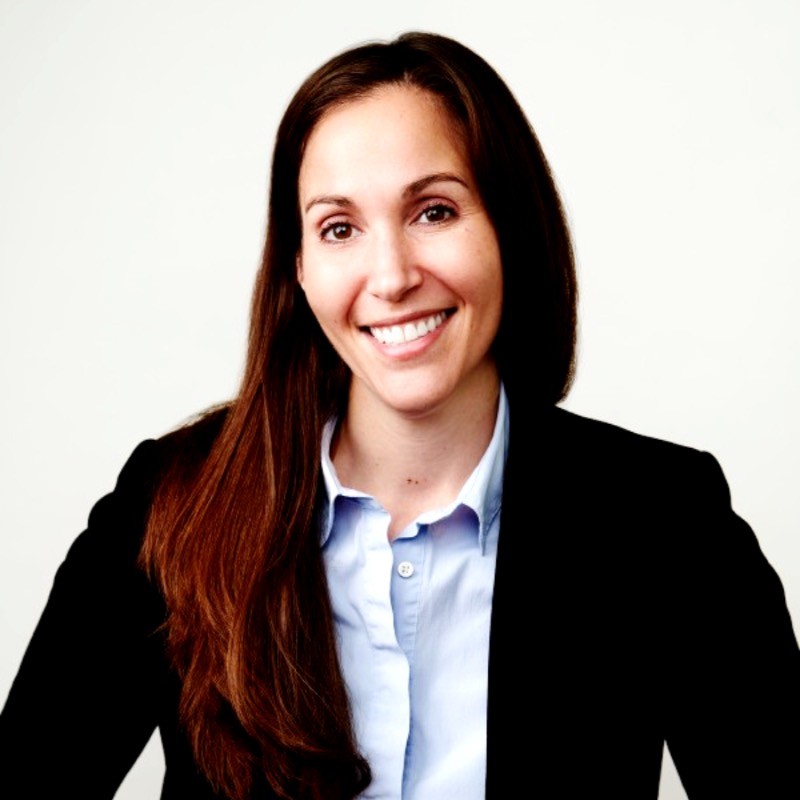
Partner at Robin Glen
Elizabeth Quanaim is a Partner at Robin Glen, where she specializes in tailored life insurance solutions that safeguard businesses, families, and legacies across generations. With a background in psychology and clinical social work from the University of Texas and experience as a collegiate volleyball player and coach, she brings both strategic insight and a collaborative spirit to her work. Elizabeth partners with entrepreneurs, attorneys, and advisors to design innovative strategies for succession planning, executive benefits, and charitable giving. Her approach blends technical expertise with a passion for helping clients build enduring wealth and security.